Wednesday, September 30


Dr Pradeep Singh, Corporate, Institutional & Organisational Senior Holistic Advisor on Civilisation • Sovereignty • Law • Economic Order, while expressing his views on the evolving global landscape, stated that at a time when large parts of the world are witnessing conflict-driven fragmentation, supply-chain disruptions, debt stress, energy volatility, inflationary pressures, institutional distrust, and growing geopolitical polarisation, Bharat is steadily positioning itself not merely as a rising economy, but as a trusted stabilising force within the evolving global order.
The geopolitical environment has fundamentally altered the meaning of power itself. Power today is no longer defined only by military capability, reserve currency dominance, or concentrated financial leverage. Increasingly, it is determined by the ability to sustain inclusive and trusted global relationships that celebrate diversity rather than oppose it, while simultaneously preserving deep-rooted civilisational values alongside modern institutional progress, economic resilience, food and energy security, technological capability, institutional continuity, productive demographics, trusted digital infrastructure, strategic policy stability, humane and mature dispute-resolution mechanisms, and decentralised productive participation.
At a deeper civilisational level, sustainable national strength cannot ultimately be measured only through GDP growth, industrial expansion, military capability, or financial scale alone. The long-duration stability of societies increasingly depends upon social harmony, inclusivity without discrimination, productive dignity, emotional well-being, community trust, cultural continuity, human-centred development, and shared participation in growth and opportunity.
The highest form of national development is one where economic progress, technological advancement, institutional strength, and strategic capability ultimately contribute toward greater societal balance, stability, happiness, dignity, and joy for one and all. For a civilisation-scale society like Bharat — rooted in coexistence, diversity, continuity, and collective well-being — harmony and inclusivity are not temporary policy tools, but foundational operating principles of enduring national continuity.
As the world navigates increasing fragmentation, alienation, and instability, societies capable of preserving both growth and social balance may ultimately emerge as the most enduring and trusted models for the future global order.
Within this evolving geopolitical environment, Bharat therefore possesses a uniquely convergent strategic advantage. While several major economies continue operating within rigid geopolitical compulsions, Bharat maintains constructive engagement across multiple regions simultaneously — including the West, Europe, the Gulf, Indo-Pacific partners, Africa, ASEAN, Russia, and the Global South — while preserving sovereign strategic autonomy.
Elaborating further on Bharat’s evolving geopolitical positioning, Dr Singh observed that this calibrated balancing capability — which not only respects but also nurtures the strategic priorities and sovereign interests of multiple stakeholders — is rapidly emerging as one of Bharat’s most significant geopolitical strengths in an increasingly polarised world.
A particularly significant dimension within this framework is Bharat’s deeply embedded rural and civilisational resilience structure, which conventional economic analysis often underestimates. Across large parts of the country, rural productive ecosystems, local self-reliance models, agricultural continuity, MSME-linked distributed economic participation, traditional community structures, and rapidly developing tier-2 and tier-3 growth centres are increasingly contributing toward decentralised national resilience.
This expanding grassroots economic depth creates stronger domestic stability, wider consumption continuity, distributed productive capacity, localised sustainability ecosystems, reduced systemic fragility during external shocks, and greater long-term social resilience.
The growing strength of Bharat’s MSME and ultra-micro enterprise ecosystem represents another important pillar within this broader framework. In an era of increasing global uncertainty, decentralised entrepreneurship, local manufacturing capability, skilled services, family-led businesses, and community-based production systems are emerging not merely as economic actors, but as foundational pillars of national resilience.
Discussing the long-term structural role of decentralised enterprise ecosystems, Dr Singh noted that the opportunity for MSMEs and ultra-micro sectors lies not only in integration with large industrial ecosystems, but also in progressively building local self-reliance, independent productive capacity, regional market resilience, indigenous innovation, sustainable value chains, technology-enabled competitiveness, and financial discipline.
A widely distributed entrepreneurial ecosystem strengthens national resilience because economic continuity becomes less dependent on concentrated corporate structures alone. This creates wider wealth participation, stronger employment resilience, distributed supply-chain adaptability, reduced systemic concentration risk, and faster localised recovery during economic disruptions.
This directly connects with one of Bharat’s most important domestic priorities — reducing unemployment and expanding dignified, sustainable, and higher-wage livelihoods across unskilled, semi-skilled, and skilled categories. In a country of Bharat’s scale, diversity, and demographic depth, employment generation cannot remain dependent only on large industry, government schemes, or centralised corporate ecosystems.
The real transformation must emerge through a distributed livelihood architecture where individuals, families, artisans, technicians, service providers, farmers, youth, women entrepreneurs, and local enterprise clusters are enabled to become self-sustaining economic units. This requires a national shift from job-dependence toward capability-led self-reliance.
Labour-related distress must not be viewed merely through the narrow prism of law-and-order management, statistical balancing, or temporary welfare intervention. At its core, unemployment, underemployment, wage stress, and livelihood insecurity are deeply humane, developmental, and structural issues.
Further elaborating on the long-term social dimensions of economic resilience, Dr Singh stated that sustainable stability in a country as large and diverse as Bharat can emerge only when individuals themselves progressively become economically resilient, productive, skilled, and self-sustaining participants within the national growth framework. The most effective bridge between rising expectations and realistic long-term growth possibilities lies in enabling skill monetisation, local enterprise ownership, productive dignity, decentralised entrepreneurship, financial discipline, community-level economic participation, and sustainable self-reliance at the individual and family level.
Bharat’s skill-development challenge must therefore be addressed through practical vocational training, micro-entrepreneurship, digital market access, financial literacy, quality certification, and stronger integration between skill, credit, market access, and execution capability.
For unskilled and semi-skilled workers, the goal must be to progressively convert basic labour into productive and higher-wage capability, while for skilled workers, the objective must be to convert technical ability into independent enterprise, regional service ecosystems, exportable services, and technology-enabled value creation.
This is how Bharat can structurally reduce unemployment — not merely by waiting for jobs to arrive, but by creating large-scale decentralised, self-sustaining livelihood ecosystems across districts, towns, villages, and urban clusters.
Turning to warehousing, agriculture, and strategic economic capacity, one of the most underutilised strategic assets for an agriculture-focused civilisation-scale nation like Bharat remains its massive warehousing, food-storage, logistics, and commodity-management ecosystem.
With more than one lakh warehousing facilities across organised and semi-organised sectors — including the extensive FCI, CWC, SWC, cooperative, rural mandi-linked, and private storage networks — Bharat possesses the foundational infrastructure to build one of the world’s largest technology-enabled agri-resilience and food-security frameworks.
Highlighting the transformative potential of technological integration within the agricultural ecosystem, Dr Singh stated that scientific modernisation through AI-driven inventory systems, IoT-enabled monitoring, climate-controlled storage, real-time logistics integration, decentralised rural aggregation, food-processing coordination, export-grade quality standardisation, and loss-prevention systems can significantly reduce post-harvest losses, strengthen food security, and substantially improve farmer-linked value creation.
Millions of under-organised agri and warehousing participants can simultaneously be upgraded into technology-enabled productive ecosystems capable of generating massive employment, rural enterprise expansion, export competitiveness, agro-processing growth, logistics development, and foreign exchange earnings.
Bharat’s agricultural and warehousing ecosystem therefore represents not merely a storage network, but one of the world’s largest under-leveraged strategic economic multipliers.
At both the individual and societal level, long-term national resilience increasingly depends upon self-disciplined and responsible resource utilisation, ESG-aligned humane conduct, productive participation, and community-conscious development.
In periods of global uncertainty, societies capable of combining economic growth with ethical responsibility, environmental sustainability, social harmony, and long-duration civilisational continuity are likely to emerge as the most stable and trusted models of the future world order.
The growing emphasis on discipline, balanced consumption, productive self-reliance, and responsible development represents an increasingly important indicator of durable long-term national strength.
Bharat’s strategic advantage is therefore not temporary. It emerges simultaneously from multiple structural dimensions including demographic scale, trusted digital infrastructure, strategic multi-alignment, supply-chain diversification opportunities, institutional continuity, technological expansion, rural resilience, agricultural depth, and civilisational continuity.
The emerging world order is unlikely to remain fully unipolar. Instead, it is gradually evolving toward a distributed and competitive multi-polar framework where trusted balancing powers will increasingly shape trade, technology, supply chains, financial connectivity, strategic partnerships, and institutional cooperation.
In such an environment, Bharat’s greatest long-term strength may ultimately not be aggression, but credibility — credibility as a trusted economic partner, a resilient democratic framework, a stable large-scale market, and a civilisationally rooted yet technologically adaptive society.
The coming decade may therefore witness a historic transition — from “India as an emerging economy” to “Bharat as a systemic anchor power shaping stability, resilience, sustainable self-reliance, productive inclusivity, trusted cooperation, and humane civilisational continuity within the evolving multi-polar world order.”
Concluding his observations, Dr Singh remarked that in periods of global uncertainty, stability itself becomes strategic power.
By -
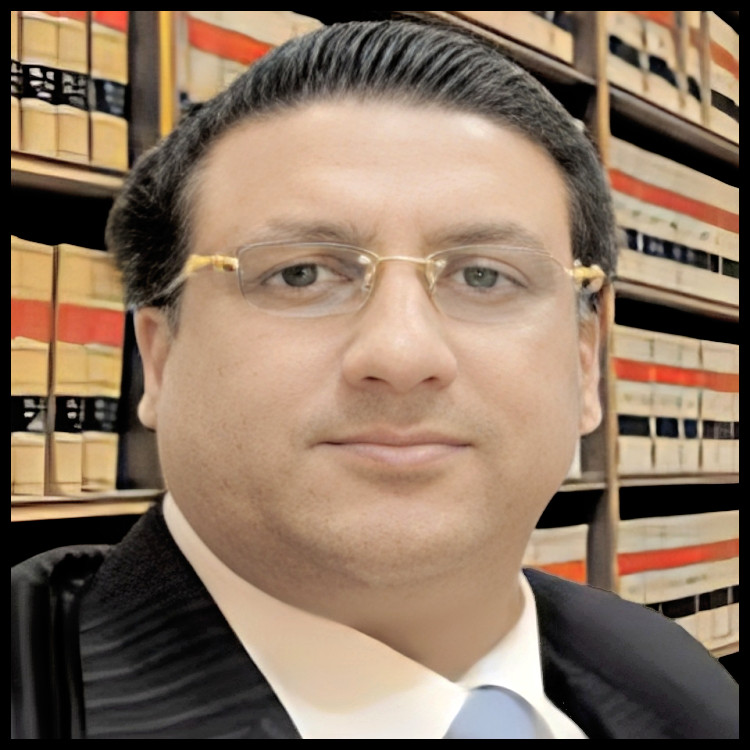
Dr Pradeep Singh
Corporate, Institutional & Organisational Senior Holistic Advisor
Civilisation • Sovereignty • Law • Economic Order
eCard : www.pradeepsingh.in
eMail : info@pradeepsingh.in
Direct : +91-8299754226


0 Comments:
Leave a Reply