Artificial Intelligence is rapidly becoming the defining technological force of the twenty-first century. Like the steam engine during the Industrial Revolution, electricity during the age of industrial expansion and the internet during the digital era, AI is beginning to reshape economies, industries, governance systems, labour markets, knowledge creation and social organisation at an unprecedented scale. Yet for Bharat, the significance of AI extends far beyond technology. It represents a strategic opportunity capable of influencing economic growth, governance, healthcare, education, scientific discovery, environmental sustainability, national competitiveness and long-term societal prosperity.
What makes the current moment particularly significant is the breadth of transformation underway. Governments, corporations, universities, hospitals, financial institutions, logistics networks, manufacturers and public-service organisations are simultaneously integrating intelligent systems into their operations. AI is improving diagnostics in healthcare, enabling personalised learning in education, strengthening fraud detection in banking, optimising supply chains in logistics, enhancing productivity in manufacturing and supporting data-driven governance. Even cultural institutions are increasingly deploying AI to preserve languages, archives, manuscripts and civilisational knowledge systems.
The global AI landscape is also becoming a defining arena of strategic competition. The United States leads in frontier AI research and platform innovation. China is investing heavily in AI industrialisation, infrastructure and large-scale deployment. The European Union is attempting to shape the regulatory architecture of responsible AI. In this evolving environment, Bharat occupies a unique position. It possesses the scale of a major market, the talent depth of a technology powerhouse, the democratic legitimacy of an open society and the institutional flexibility of a rapidly developing economy. Rather than replicating any single model, Bharat has the opportunity to emerge as a bridge between innovation, inclusion, governance and global collaboration within an increasingly multipolar technological order.
Few nations possess the combination of demographic scale, technical capability, entrepreneurial energy and digital infrastructure available to Bharat. Home to one of the world's largest youth populations and a globally recognised technology workforce, the country has already demonstrated its ability to build digital systems at population scale. Platforms such as Aadhaar, UPI, DigiLocker and the broader India Stack ecosystem have created one of the world's most ambitious digital public infrastructures, providing valuable lessons in inclusion, interoperability and scalability. This foundation is increasingly being recognised as a strategic advantage in the AI era.
Beyond its domestic significance, Bharat may also prove consequential to the future of global Artificial Intelligence itself. Few nations simultaneously represent the world's largest democratic AI ecosystem, one of the most complex multilingual knowledge environments, one of the largest digital inclusion laboratories and a future workforce capable of supporting AI deployment at unprecedented scale. The country's experience in building population-scale digital public infrastructure, delivering services across extraordinary linguistic, cultural and socio-economic diversity, and balancing innovation with democratic accountability provides lessons of growing relevance to the international community. As the AI era increasingly raises questions of trust, accessibility, governance and equitable participation, Bharat possesses the potential to serve not merely as a major AI market, but as a large-scale testbed for population-scale AI governance and a constructive bridge between the Global North and Global South. In doing so, Bharat may help demonstrate how advanced intelligent systems can be deployed not only efficiently, but also inclusively, responsibly and at scale.
The IndiaAI Mission represents a significant step in strengthening national capability. Supported by investments exceeding ₹10,000 crore and backed by a rapidly expanding national compute framework, the initiative seeks to strengthen datasets, foundational models, startup ecosystems, skilling pathways, research capacity and responsible AI governance. More than 38,000 GPUs have been earmarked under the national compute programme, reflecting a strategic understanding that AI competitiveness depends not merely on applications but on compute, infrastructure, talent and governance. Simultaneously, Bharat's startup ecosystem—one of the largest in the world—continues to expand across deep-tech, AI, semiconductor and digital innovation domains.
The economic implications are substantial. Multiple industry and policy estimates suggest that Artificial Intelligence could contribute between US$500 billion and US$1.5 trillion or more to Bharat's economy over the coming decade through productivity gains, operational efficiencies, innovation and new business creation. Globally, AI is projected to generate economic value measured in multiple trillions of dollars, making it one of the most significant economic transformations since the rise of the internet. Nations that successfully combine talent, compute, infrastructure and governance are likely to capture a disproportionate share of this value creation.
Equally important is the infrastructure beneath intelligence. Artificial Intelligence ultimately depends upon four foundational pillars: talent, compute, infrastructure and governance. AI cannot operate at scale without advanced computing power. Compute cannot exist without semiconductors, cloud architecture, data centres, connectivity and energy resilience. Infrastructure cannot function without skilled human capital. Consequently, the AI revolution is simultaneously creating opportunities across technology, engineering, manufacturing, construction, telecommunications, energy, logistics and professional services.
Public policy alone will not determine Bharat's position in the AI era. Private-sector investment is becoming an equally important driver. Over the coming decade, some of Bharat's largest industrial, technology, telecommunications and infrastructure groups have announced or outlined plans involving investments amounting to hundreds of billions of dollars across AI-ready infrastructure, cloud ecosystems, data centres, semiconductor manufacturing, digital platforms and advanced computing capacity. Alongside these flagship ambitions, operators such as NTT, STT GDC, Yotta, CtrlS, Nxtra, Sify, Equinix, AdaniConneX and Digital Connexion are expanding rapidly across Mumbai, Hyderabad, Chennai, Bengaluru, Noida, Pune and Visakhapatnam. Hyderabad alone is projected to become one of the country's largest future data-centre hubs. Collectively, these developments represent one of the largest digital and AI infrastructure build-outs in Bharat's history and are positioning the country as an increasingly significant destination for compute capacity, AI deployment and long-term technological innovation.
Simultaneously, Bharat's semiconductor ambitions are gaining momentum through multi-billion-dollar fabrication, assembly, testing and electronics-manufacturing initiatives designed to strengthen technological resilience, reduce strategic dependencies and support the long-term requirements of the AI economy. While semiconductor self-sufficiency remains a long-term objective, the direction of policy and investment reflects a growing recognition that chips, compute and AI infrastructure will increasingly form the backbone of future economic competitiveness.
AI is also becoming a strategic asset for national security, defence, cybersecurity and technological sovereignty. In the intelligent age, trusted compute, semiconductors and secure digital infrastructure will increasingly influence long-term strategic resilience. The implications for employment are profound. The future AI economy will require far more than software engineers. It will demand machine-learning specialists, data scientists, semiconductor engineers, chip architects, robotics professionals, cloud engineers, cybersecurity experts, AI auditors, compliance professionals, legal specialists, ethics experts, deployment managers, educators, trainers, infrastructure operators and maintenance ecosystems. Importantly, these opportunities are unlikely to remain confined to metropolitan centres. Increasingly, they are extending into Tier-2 and Tier-3 cities, universities, vocational institutions and emerging entrepreneurial hubs. The world's largest youth population may simultaneously become one of the world's largest AI talent reservoirs.
Unlike previous industrial transitions that primarily automated physical labour, AI increasingly augments cognitive work. Properly deployed, intelligent systems have the potential not only to improve productivity but also to amplify human capability, enabling individuals, institutions and enterprises to achieve higher outcomes with greater efficiency, precision and speed.
The transformation is already visible. A farmer using AI-assisted weather forecasting, a patient benefiting from AI-enabled diagnostics, a student learning through adaptive educational platforms, a citizen making real-time digital payments or a logistics operator optimising delivery routes may appear to be participating in unrelated activities. In reality, each is increasingly interacting with different layers of the same intelligent ecosystem quietly reshaping modern life.
Beyond economics and employment, AI is beginning to influence the physiological, cognitive and behavioural dimensions of human life. Intelligent healthcare systems are improving preventive care and personalised medicine. Wearable devices monitor health indicators in real time. Educational platforms adapt to individual learning needs. Digital ecosystems increasingly shape how people learn, communicate, consume information and make decisions. In many respects, AI is becoming what electricity became during the twentieth century—an enabling layer quietly supporting countless activities behind the scenes.
However, the path ahead is not without challenges. The AI era introduces complex questions surrounding energy consumption, compute concentration, semiconductor dependencies, geopolitical competition, cybersecurity, misinformation, deepfakes, algorithmic bias, workforce displacement and digital inequality. As intelligent systems become increasingly embedded within critical infrastructure and public life, issues of safety, accountability, transparency and trust will become as important as innovation itself. The nations that succeed in the intelligent age are unlikely to be those that simply build the most powerful systems, but those that most effectively balance capability with responsibility.
This is where Bharat's civilisational perspective may hold particular relevance. Throughout its intellectual history, Bharat has approached knowledge not merely as an instrument of power, but as a means of responsible advancement. Concepts such as Dharma, Satya, Nyaya, Karuna, Lokasangraha and Vasudhaiva Kutumbakam emphasise the relationship between knowledge, ethics, responsibility and collective welfare. While AI is fundamentally a technological phenomenon, its long-term success will depend upon trust, inclusivity, accountability and human-centred governance. In this respect, Bharat possesses an opportunity to contribute not only technical capability, but also a broader framework for responsible innovation that aligns technological progress with human dignity and shared prosperity.
Looking further ahead, the current wave of AI may represent only the beginning. Artificial General Intelligence and eventually Artificial Superintelligence could fundamentally transform scientific discovery, healthcare, education, governance, economic productivity and human knowledge itself. Whether such systems emerge within decades or over longer horizons remains uncertain. What is increasingly clear is that their development will require robust governance frameworks, ethical oversight, international cooperation and public confidence.
History rarely offers nations the opportunity to participate in the creation of entirely new technological paradigms. The emergence of Artificial Intelligence may represent one of those rare moments. For Bharat, the opportunity extends beyond economic growth, employment generation or technological competitiveness. It encompasses the possibility of helping shape how intelligent systems are designed, governed, deployed and integrated into society.
By combining talent, compute, infrastructure, innovation, inclusivity, ethical governance and civilisational wisdom, Bharat possesses the potential to emerge as a distinctive global anchor within the evolving AI ecosystem—not through domination or exclusion, but through capability, collaboration, responsible innovation and shared prosperity.
The AI revolution is no longer approaching. It has already begun. The question is no longer whether Artificial Intelligence will transform Bharat. The real question is whether Bharat will merely participate in the intelligent age—or help shape it. At a time when the world's major powers are competing to define the future of intelligence, Bharat's greatest opportunity lies not merely in building advanced systems, but in demonstrating how innovation, inclusivity, responsibility and human dignity can evolve together.
The future of Artificial Intelligence may ultimately be determined not only by those who build the most powerful models, but also by those who demonstrate how intelligence can be scaled responsibly across diverse societies, cultures, languages and economic realities—ensuring inclusion without discrimination, preserving human dignity, and respecting the sovereignty, democratic choices and developmental aspirations of nations.
Future generations may ultimately remember this era not for the intelligence of machines, but for the wisdom with which humanity chose to govern them. Bharat's greatest opportunity lies not merely in building intelligent systems, but in helping shape an intelligent civilisation.
By -
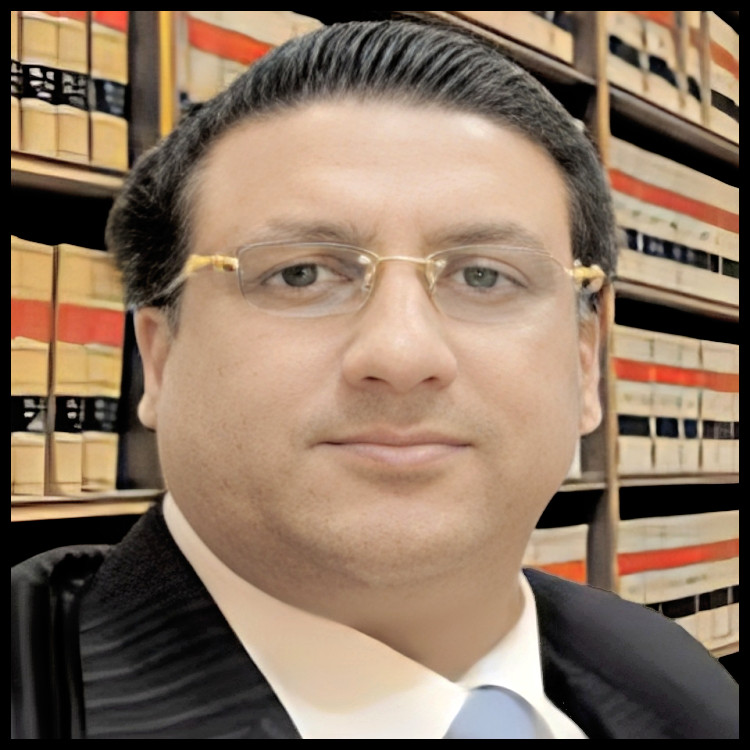
Dr Pradeep Singh
Corporate, Institutional & Organisational Senior Holistic Advisor
Civilisation • Sovereignty • Law • Economic Order
eCard : www.pradeepsingh.in
eMail : info@pradeepsingh.in
Direct : +91-8299754226


0 Comments:
Leave a Reply