Civilisations are tested not merely by the conflicts they survive, but by the order they restore thereafter. Wars are fought, blood is shed, anger and power exhaust themselves, and competing truths make their claims; yet humanity ultimately moves towards Samjhauta — towards an equilibrium where legitimate interests can coexist and no stakeholder remains a perpetual loser.
This principle runs from the macro to the micro. In an intensely interconnected world, global leadership cannot remain captive to uncontrolled anger, frustration or ego when its decisions can affect billions. Within families and societies, the same matured wisdom must transcend entrenched positions before differences become inherited conflicts. Leadership — of nations, institutions or families — matures when it sees beyond the immediate contest towards peaceful coexistence and the long-term good.
Vedic wisdom begins with the whole: rights with duties, justice with compassion, strength with restraint, individual with collective, humanity with Nature. For All • Against None.
From Samjhauta arises Samanwaya — harmonising differences without demanding sameness; from Samanwaya emerges Samadhaan — resolving not merely the dispute, but the conditions that repeatedly recreate it.
Hence an intentionally ambitious aspiration: towards zero-litigation nations and zero-litigation families — not by diminishing access to justice, but by developing cultures, leadership and institutions mature enough to make litigation the last resort rather than the first instinct.
TWO DEVELOPMENTS • TWO VERTICALS • ONE LARGER MOVEMENT
Two developments from entirely different institutional spheres deserve attention.
The Russian Federation has appointed former Chief Justice of India Dr. D.Y. Chandrachud as its arbitrator in an investment-treaty dispute brought by Ukrainian state-owned Oschadbank. Amid profound geopolitical rupture, the significance extends beyond the eventual outcome: arbitration and ADR demonstrate that even deeply contested interests can move from confrontation towards institutional process, reason and resolution.
Disagreement need not disappear before the journey towards Samjhauta • Samanwaya • Samadhaan begins.
In an entirely different vertical, U.S. President Donald Trump has publicly cited India's voter-identification system while advocating electoral reforms in the United States, drawing directly upon India's experience and Chief Election Commissioner Gyanesh Kumar in making his case. India and the United States possess distinct constitutional and electoral architectures; no institutional model can simply be transplanted. Yet the experience of the world's largest democracy entering the institutional conversation of one of the world's oldest modern democracies is significant.
One development concerns arbitration, ADR and adjudicatory credibility; the other, democracy, electoral governance and public institutional architecture. They should not be artificially connected. Their independence is precisely what makes their near-simultaneous visibility significant.
Bharat's accumulated institutional experience is beginning to travel outward — quietly, independently and across entirely different verticals.
A beginning, not a conclusion.
KĀLA • KARMA • COSMOS
History rarely announces its deepest transformations when they begin. The Vedic conception of Kāla sees time not merely as chronology, but as the field within which Karma becomes visible consequence. Noble, ethical, legitimate and disciplined action may remain unseen for years before its accumulated consequences emerge.
The present Jyotisha canvas offers another contemplative dimension. The Sun's recent ingress into Simha — its own sign — evokes sovereignty, legitimate authority, leadership and institutional responsibility. Jupiter's movement through Ashlesha adds acceleration to themes of wisdom, inherited structures and deeper complexities, while the approaching Rahu–Ketu axis change symbolically points towards a further reorientation of collective priorities and established narratives.
These movements neither replace human agency nor establish institutional causation. They illuminate an ancient understanding of Kāla: the moment when what Karma prepared earlier becomes visible.
We are witnessing such a moment.
What appears sudden may be the visible consequence of foundations silently built over time.
The wisdom of the Vedic Rishis and Bharat's subsequent knowledge traditions takes this inquiry further. Nothing exists entirely in isolation. Humanity is integral to one planet Earth; Earth is integral to one dynamic universe; and within human existence lies an extraordinary order extending to the subatomic realm.
From subatomic harmony to universal harmony, the entire ecosystem of existence is deeply interconnected — individual, family, society, institutions, nation, Nature, planet and cosmos forming dimensions of one larger whole.
An explicit classical formulation of this microcosm–macrocosm understanding appears in Caraka Saṃhitā, Śārīrasthāna 4.13:
एवमयं लोकसंमितः पुरुषः।
यावन्तो हि लोके मूर्तिमन्तो भावविशेषास्तावन्तः पुरुषे,
यावन्तः पुरुषे तावन्तो लोके।
In essence: what exists in the world finds correspondence in the individual, and what exists in the individual finds correspondence in the world.
This civilisational intuition is memorably encapsulated in the traditional maxim:
यत् पिण्डे तत् ब्रह्माण्डे
Yat Piṇḍe Tat Brahmāṇḍe
“As in the microcosm, so in the macrocosm.”
This is not an attempt to equate Vedic philosophy with modern subatomic physics. Its proposition is philosophical: the part exists within, and in relationship with, the whole. Harmony at one level cannot be contemplated entirely apart from the larger order of which it forms a part.
When initiatives are noble, ethical, legitimate and directed towards the larger good, Vedic wisdom calls for alignment with Dharma, Nature and the wider order — For All • Against None.
Nature energises what aligns with the larger noble, ethical and harmonious order of existence.
THE WORLD BEYOND 2026
Our world is simultaneously more connected and more fragmented. War in one geography affects food, energy and economies elsewhere. Artificial intelligence challenges sovereignty, accountability and human agency. Economic interdependence encounters strategic rivalry. Information disorder tests democratic legitimacy. Families and societies continue carrying avoidable disputes across generations.
Power may determine outcomes. Power alone cannot create enduring equilibrium.
Here Bharat's civilisational vocabulary acquires contemporary institutional relevance. Dharma connects power with responsibility; Samvāda sustains dialogue through disagreement; Samjhauta moves beyond confrontation; Samanwaya creates alignment without enforced uniformity; Samadhaan seeks enduring resolution; Vasudhaiva Kutumbakam places humanity within one interconnected whole.
These principles do not replace constitutions, courts, markets, diplomacy, science or technology. They provide an ethical orientation through which each may function with greater maturity.
Civilisational inheritance is not entitlement. It is responsibility.
Greater international relevance must therefore correspond with higher standards within Bharat itself — constitutional discipline, democratic credibility, judicial independence, institutional continuity, professional excellence, responsible technology and the capacity to disagree without converting difference into permanent hostility.
The principle begins with the individual and family and travels upwards.
The micro and macro ultimately meet.
The world does not need another civilisation merely proclaiming its greatness. It may increasingly need one capable of translating accumulated wisdom into institutions that work, leadership that matures and solutions that endure.
The defining question beyond 2026 is therefore not merely how powerful Bharat becomes, but what Bharat does with greater capability, responsibility and global attention.
Can sovereignty coexist with cooperation? Can technology advance while preserving human dignity? Can justice prevent vengeance from becoming perpetual? Can nations resolve differences before generations inherit them? Can families reconcile before disputes permanently fracture relationships?
Can Vasudhaiva Kutumbakam evolve from timeless wisdom into a practical grammar for an intensely interconnected world?
Perhaps the deepest transformations remain silent until their consequences become visible.
Somewhere between Kāla and Karma, Piṇḍa and Brahmāṇḍa, wisdom and institution, sovereignty and cooperation, individual and family, nation and world, Bharat may be silently energising possibilities for a more harmonious global order.
Not a proclamation. Not a conclusion.
A beginning — and a gateway.
A gateway towards Samjhauta • Samanwaya • Samadhaan — towards resolution before avoidable litigation, harmony before perpetual conflict, and leadership capable of seeing the whole.
For All • Against None
Vasudhaiva Kutumbakam
Harmony & Joy To All !
By -
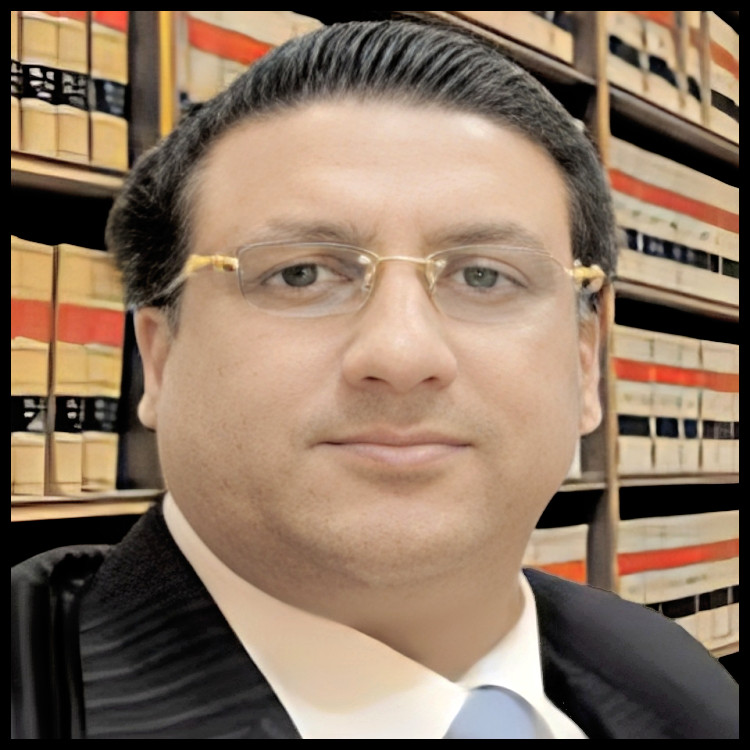
Dr Pradeep Singh
www.pradeepsingh.in
Bharat Trade Doctrine 2026
Multipolar Economic Architecture | Rule-Shaping Statecraft


0 Comments:
Leave a Reply