Drawing upon a multidisciplinary perspective across law, corporate and institutional advisory, governance and dispute resolution, this reflection explores whether the architecture of dispute resolution can move beyond the determination of competing claims towards sustainable solutions — while remaining firmly grounded in law, legitimacy and underlying ethics.
The future of dispute resolution may not lie merely in determining who wins and who loses, but in asking a more consequential question:
Can a dispute become the gateway to a better and more sustainable outcome?
Law remains indispensable to protecting rights, enforcing obligations and preserving the rule of law. Courts provide authoritative adjudication backed by sovereign authority. Arbitration provides an internationally established framework for the binding determination of disputes. Both remain indispensable where rights require authoritative determination, public policy or precedent is engaged, interim protection is necessary, or consensual resolution is neither appropriate nor achievable.
But adjudication need not define the entire architecture of resolution.
Across international, governmental, institutional, corporate, commercial and individual relationships, disputes arise at different scales and within different legal, economic and social environments. Yet beneath these differences lies a recurring challenge: how to protect legitimate rights and interests, remain informed by underlying ethics, and resolve conflict without unnecessarily destroying value, continuity, relationships or future possibility.
International dispute-resolution architecture increasingly recognises consensual processes alongside adjudication. Frameworks for mediation and mediated settlements reflect a broader institutional recognition that effective dispute resolution may involve not only determining legal entitlement, but also enabling parties to construct durable outcomes that adjudication alone may not always be designed to create.
The opportunity, therefore, is not to displace established mechanisms, but to consider a broader philosophy of resolution within them and alongside them.
The law is not displaced. Its role is expanded.
From adversarial positions towards legitimate interests. From determining liability towards resolving the underlying conflict. From consuming value towards preserving value. From managing disputes towards architecting solutions.
FROM THE MACRO TO THE MICRO
At the macro level, disputes may concern nations, governments, public institutions, international investments, infrastructure, markets and cross-border economic relationships.
At the institutional level, they may involve corporations, financial institutions, investors, joint ventures, partnerships, regulators, supply chains and complex commercial ecosystems.
At the micro level, similar dynamics may arise between enterprises, professional counterparts, family businesses and individuals.
The governing law, scale, bargaining power, public interest and consequences may differ profoundly.
The underlying resolution inquiry, however, remains adaptable: What created the engagement? What produced the divergence? What legitimate rights and interests must be protected? What underlying ethical considerations should inform the process? What value remains capable of preservation? And what sustainable architecture offers the most responsible way forward?
THE PRE-DISPUTE FOUNDATION
Most disputes do not arise in a vacuum.
Before there was a dispute, there was ordinarily something that brought the parties into engagement — a treaty or institutional framework, contract, investment, transaction, commercial arrangement, undertaking, understanding, relationship, shared purpose or element of trust, whether formally documented, verbally expressed or otherwise legally cognisable.
The disagreement came later.
That distinction matters.
Traditional adjudication necessarily concentrates upon the controversy presented for determination: rights, obligations, breaches, defences, evidence and remedies.
A broader resolution inquiry can examine both the history of the conflict and the history of the engagement that preceded it:
What originally brought the parties together?
What subsequently divided them?
Which legitimate elements of the original engagement retain value?
What underlying ethical considerations remain relevant?
Can legitimate value be preserved, reconstructed or transformed without compromising rights, legality or institutional integrity?
This does not romanticise the original relationship, nor presume that every relationship should be preserved.
Some relationships should end.
Some breaches require authoritative determination.
Some conduct makes restoration inappropriate.
Some disputes involve fraud, illegality, serious power asymmetries, public policy, precedent or rights that should never be traded for commercial convenience.
Sustainable resolution cannot be built upon the compromise of legitimacy or underlying ethics.
But where legitimate underlying value remains, its unnecessary destruction merely because a dispute has arisen may itself constitute an additional economic, institutional, commercial or human loss.
FROM SETTLEMENT TO ROOT-LEVEL RESOLUTION
This is where root-level resolution can be distinguished from settlement understood merely as negotiated compromise.
Settlement may ask:
“On what mutually legitimate terms can this dispute end?”
Root-level resolution asks something wider:
“What produced the conflict, what legitimate interests lie beneath the stated positions, what underlying ethics should inform the process, what value existed before the dispute, what remains worth protecting — and what sustainable solutions framework can legitimately address the parties and create a durable way forward?”
The distinction is consequential.
The objective is not reconciliation for its own sake.
It is not artificial equivalence between unequal claims.
It is not compromise at the expense of enforceable rights.
And it is not a predetermined preference for settlement over adjudication.
It is the disciplined exploration of whether rights, legitimate interests, underlying ethics, commercial realities and institutional objectives can be brought within a sustainable solutions framework capable of addressing the dispute more completely.
THE OBJECTIVE OF DISPUTE RESOLUTION
The objective of sophisticated dispute resolution should extend beyond securing termination of the immediate controversy.
Where appropriate, it should seek a sustainable solutions framework that legitimately addresses all parties — their respective rights, obligations, legitimate interests and concerns — while remaining grounded in law and informed by underlying ethics.
This does not mean that competing rights are equal.
It does not mean that every interest deserves accommodation.
It does not mean that every party must receive an equivalent outcome.
And it does not require legal entitlement to be diluted in pursuit of artificial consensus.
Rather, it asks whether every legitimate dimension of the dispute has been intelligently considered before determining the architecture of its resolution.
The inquiry therefore moves beyond:
“On what mutually legitimate terms can this dispute end?”
towards:
“What sustainable solutions framework can legitimately address the parties' respective rights and interests, remain informed by underlying ethics, resolve the underlying conflict, preserve what remains valuable and create the most durable way forward?”
The ultimate objective is therefore not settlement at any cost, nor victory at any cost, but the architecture of sustainable solutions that legitimately addresses all parties — grounded in law, informed by underlying ethics, protective of rights and capable of preserving institutional integrity.
THE WIDER CONSEQUENCES OF DISPUTES
A significant dispute rarely exists only within its pleadings.
At the macro level, prolonged conflict may affect investment, infrastructure, markets, public resources, economic confidence and institutional cooperation.
At the organisational level, it may consume capital, management time, productive capacity, reputation, relationships and commercial opportunity.
At the individual level, it may consume financial resources, professional relationships, time, trust and human energy.
The scale changes. The principle does not.
A legally successful outcome can therefore still carry substantial economic or institutional cost.
Conversely, a negotiated outcome should not be regarded as successful merely because proceedings have ended.
A more complete measure is the net legitimate value protected, preserved or responsibly created after rights, risks, underlying ethics and wider consequences have been properly considered.
This changes the inquiry from:
“What can we extract from the other side?”
to:
“What outcome most effectively protects legitimate rights and interests while minimising unnecessary destruction of value?”
BEYOND THE SIMPLISTIC IDEA OF “WIN-WIN”
A win-win outcome does not mean equal concessions.
It does not mean everyone receives everything initially sought.
And it does not require pretending that competing legal positions possess equal merit.
A sophisticated win-win architecture exists where legitimate entitlements remain protected while the resolution identifies interests, assets, timing structures, future opportunities, commercial arrangements, governance mechanisms or institutional accommodations capable of creating value unavailable through a binary remedy alone.
Depending upon scale and context, this might involve restructuring future obligations, modifying performance, separating contested from uncontested issues, preserving viable commercial relationships, redesigning governance arrangements, establishing future-facing protocols, or combining monetary and non-monetary outcomes.
The possibilities necessarily differ from dispute to dispute.
The principle is not predetermined compromise. It is intelligent optionality within the boundaries of law, legitimacy and underlying ethics.
ARCHITECTS OF SOLUTIONS
Within this broader architecture, lawyers, mediators, arbitrators, institutions, decision-makers and — fundamentally — the parties themselves may each have a role.
Counsel's foundational responsibility remains the protection of the client's lawful rights and legitimate interests. Mediators facilitate rather than impose outcomes. Courts and tribunals remain indispensable where authoritative determination is required.
The broader dispute-resolution process can nevertheless ask:
What is the legal position?
What is the underlying objective?
What must be protected?
What should never be compromised?
What can legitimately and ethically be restructured?
What value is being consumed while conflict continues?
What legitimate value from the original engagement remains capable of preservation or transformation?
And is there a sustainable outcome that adjudication or positional bargaining, standing alone, may not be capable of producing?
These questions require legal competence, but also commercial understanding, strategic judgement, ethical consciousness, institutional sensitivity and disciplined imagination.
That is the essence of becoming architects of solutions: not weakening advocacy or entitlement, but expanding the field within which legitimate resolution is intelligently explored.
A COMPLEMENTARY — NOT COMPETING — ARCHITECTURE
This philosophy does not create a binary choice between adjudication and consensual resolution.
They can be complementary.
Authoritative adjudication establishes and protects legal rights. Negotiation, mediation and other consensual mechanisms may resolve some issues while arbitration or litigation determines those genuinely requiring authoritative adjudication.
The sophisticated question is therefore not simply:
“Litigation, arbitration, mediation or settlement?”
It is:
“What combination of processes is proportionate to the rights, risks, underlying ethics, relationships, scale and future interests involved in this particular dispute?”
That is dispute-resolution architecture.
FROM WINNING DISPUTES TO CREATING SUSTAINABLE OUTCOMES
Whether a dispute exists between nations, governments, institutions, corporations, commercial counterparties or individuals, the defining question may therefore extend beyond:
“Did we win the dispute?”
towards:
“Did we protect legitimate rights, remain faithful to underlying ethics, address the real conflict, preserve recoverable value and create the most sustainable outcome reasonably available?”
Victory remains essential where victory is necessary.
But victory and resolution are not invariably synonymous.
A corporation may win an award yet lose a strategically valuable commercial relationship.
An institution may establish liability while consuming disproportionate resources.
Parties may obtain compensation while leaving untouched the structural cause from which recurring disputes emerge.
At the smallest scale, individuals may technically prevail while destroying something of greater enduring value than the issue originally contested.
Conversely, an intelligently architected resolution may protect the essential legal position while preserving capital, continuity, reputation, institutional relationships, human relationships or future opportunity.
The scale may move from the global to the institutional to the individual. The discipline remains adaptable: protect legitimate rights, respect underlying ethics, address legitimate interests, resolve what is divisive, preserve what remains valuable, and architect what can sustainably follow.
Perhaps the future of sophisticated dispute resolution lies precisely here:
Not in weakening advocacy. Not in compromising rights. Not in replacing courts or arbitration. Not in pursuing settlement merely for the sake of settlement.
But in recognising that between conflict and determination there may exist a wider field of legitimate possibility.
Before asking only how a dispute should end, the resolution process may therefore ask:
What brought the parties into engagement? What divided them? What must be protected? What do the underlying ethics require? What remains worth preserving? And what can now be responsibly and sustainably created?
Not every dispute requires someone to be defeated.
Sometimes, the greater achievement lies in transforming competing rights and interests into a sustainable solutions framework that legitimately addresses all parties — an architecture in which resolution protects rights, respects underlying ethics, preserves legitimate value and creates a more sustainable way forward.
Samjhauta • Samanwaya • Samadhaan
Beyond Conflict. Towards Sustainable Resolution.
Harmony & Joy To One & All !
By -
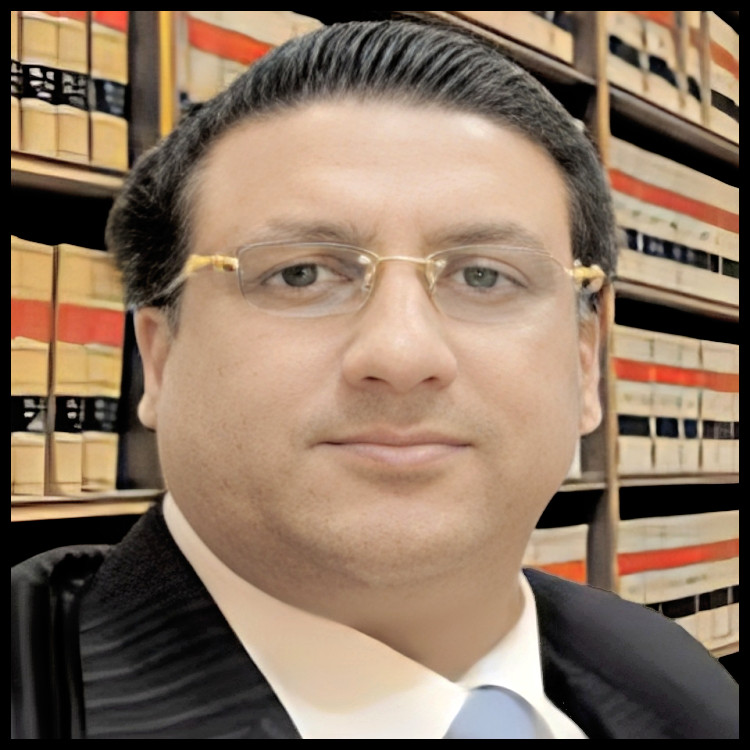
Dr Pradeep Singh
www.pradeepsingh.in
Bharat Trade Doctrine 2026
Multipolar Economic Architecture | Rule-Shaping Statecraft


0 Comments:
Leave a Reply